The Holy Spirit's Presence
Published May 21, 2026
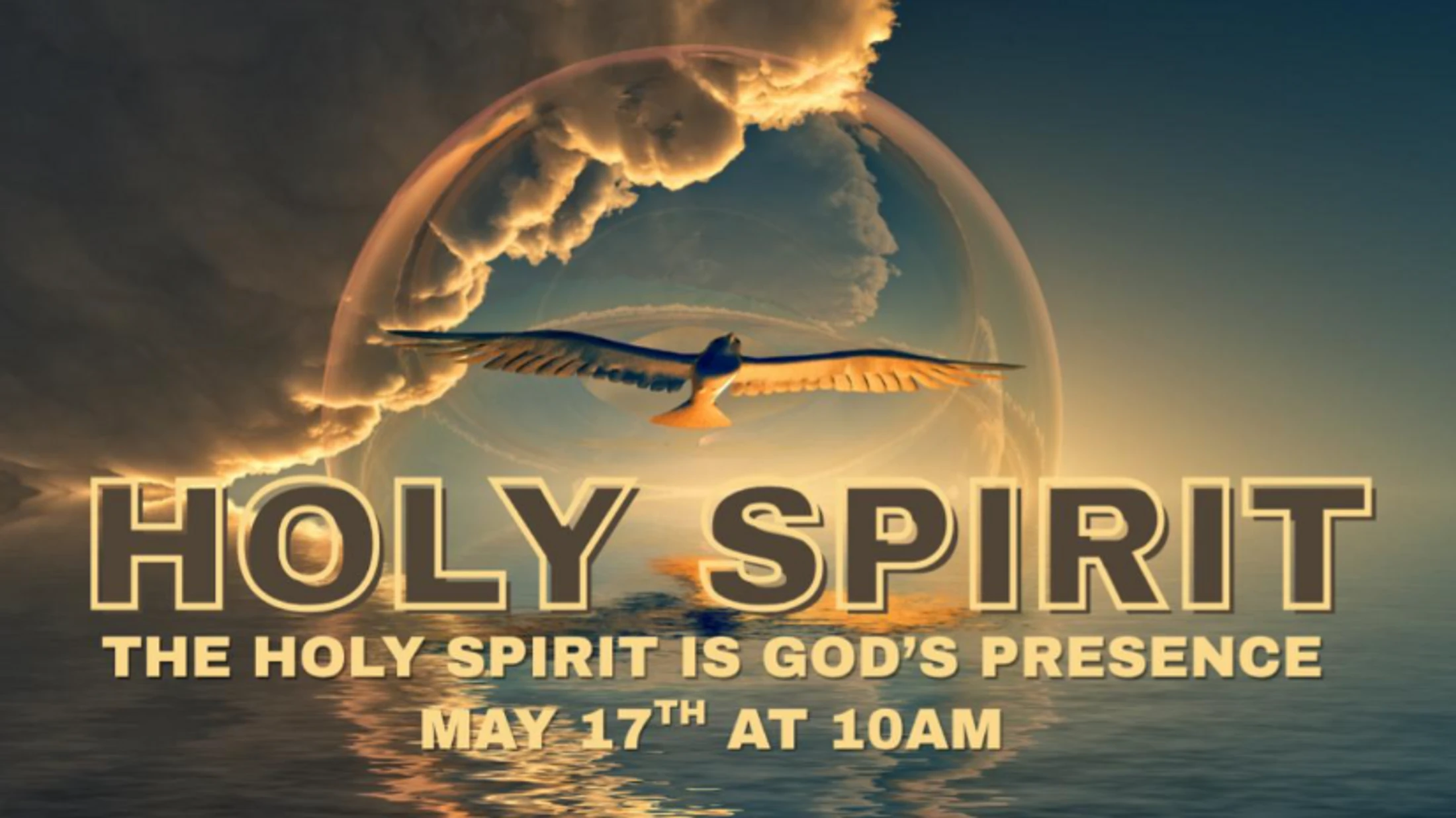
1 Corinthians 3:16
Pastor Al Soto
You Always Know When a Home Has Children Because There Is Evidence Left Behind That They Exist!
Paul says in 1 Corinthians 3:16 (ESV):
"Do you not know that you are God's temple12 and that God's Spirit dwells in you?"
In other words: When God moves in… there should be signs somebody lives there.
The Holy Spirit is not just a theological concept, emotional goosebumps, or God's spiritual Wi-Fi. He is God's personal presence living within believers.
1. You Are God's Temple
"Do you not know that you are God's temple34 and that God's Spirit dwells5 in you?" — 1 Corinthians 3:16, ESV
"Or do you not know that your body is a temple of the Holy Spirit within you, whom you have from God? You are not your own." — 1 Corinthians 6:19, ESV
The Holy Spirit moves in because of the finished work of Jesus Christ. That means you are never alone. God's presence is not distant.
It is personal!
2. Moses Knew God's Presence Changes Everything
"And he said to him, 'If your presence will not go with me, do not bring us up from here.'" — Exodus 33:15, ESV
- The birth of the Church was establishing a Prophetic Community.67
- The Church is never ultimately called to chase relevance, but to carry prophetic meaning. Relevance asks, "How do we fit into the culture?" Prophetic ministry asks, "How do we faithfully represent the heart of God to the culture?"
- The Church does not exist to become a baptized version of whatever is trending. We are called to be Spirit-filled people who lovingly, boldly, and prophetically point others to Jesus.
- And let's be honest… if the early church had focused mainly on relevance, Peter would have opened with, "Hey Rome, we just want to be relatable." Instead, they carried the presence and power of God — and the world was changed.
Joel Said It!
The Church is the Redemptive Voice of the Kingdom in the Last Days…
The Establishment of a Prophetic Community
"'And in the last days it shall be, God declares, that I will pour out my Spirit on all flesh, and your sons and your daughters shall prophesy, and your young men shall see visions, and your old men shall dream dreams; even on my male servants and female servants in those days I will pour out my Spirit, and they shall prophesy.'" — Acts 2:17–18, ESV
Established amid this world falling apart!
"And I will show wonders in the heavens above and signs on the earth below, blood, and fire, and vapor of smoke; the sun shall be turned to darkness and the moon to blood, before the day of the Lord comes, the great and magnificent day." — Acts 2:19–20, ESV
Three Thoughts for the "Know-It-All" Christian8
(A gentle word for those of us who have done "a lot of church services")
1. Familiarity can quietly replace hunger
Scripture: Revelation 2:4–5
You can attend services and still lose wonder. It is possible to know the routines of God without actually engaging the presence of God.
Sometimes the biggest danger in church life is not rebellion — it's routine without reverence.
2. Experience is not the same as intimacy
Scripture: Philippians 3:10
You can know how church "works" and still miss knowing Christ deeply. Paul says, "I want to know Him" — not just know about Him, not just know the system, but know Him personally.
Even the most experienced believer still needs fresh encounters with Jesus.
3. The Holy Spirit still has new things to show you
Scripture: John 16:13
The Holy Spirit is not running a rerun. He leads us into truth, not repetition. If we stay humble, God will continue to stretch, correct, and deepen us.
The moment we think we've "got it all figured out," we stop following and start coasting.
Important Thought
Church experience is valuable — but it is not the goal. Jesus is the goal.
The Truth of the Last Days!
"And it shall come to pass that everyone who calls upon the name of the Lord shall be saved." — Acts 2:21, ESV
God's presence postures us to live with expectation that God is at work!
3. The Holy Spirit Brings God's Presence
"And I will ask the Father, and he will give you another Helper, to be with you forever, even the Spirit of truth, whom the world cannot receive, because it neither sees him nor knows him. You know him, for he dwells with you and will be in you." — John 14:16–17, ESV
The Spirit does not simply make us louder in worship. He makes us more loving in life.
"But the fruit of the Spirit is love, joy, peace, patience, kindness, goodness, faithfulness, gentleness, self-control; against such things there is no law." — Galatians 5:22–23, ESV
Here's a Humorous Comparison9
Love
- Fruit of the Spirit: I choose you even when you're difficult, slow, and forgot to text back.
- World's mindset: I love you… until you inconvenience me or take my parking spot.
Joy
- Fruit of the Spirit: Deep-rooted gladness even when life is not going well.
- World's mindset: Joy = Wi-Fi is strong, coffee is hot, and no one is talking to me before 10 AM.
Peace
- Fruit of the Spirit: Calm confidence because God is in control.
- World's mindset: Peace = everyone agrees with me and nothing challenges my opinion.
Patience
- Fruit of the Spirit: I can wait because God is working.
- World's mindset: If it takes longer than 2 seconds, I'm already annoyed and checking if I can cancel it.
Kindness
- Fruit of the Spirit: Treating people with grace even when they don't deserve it.
- World's mindset: Kindness is optional… unless I'm trying to get a refund.
Goodness
- Fruit of the Spirit: Doing right even when no one is watching.
- World's mindset: Goodness is doing whatever feels good — as long as I don't get caught.
Faithfulness
- Fruit of the Spirit: Steady, loyal, consistent.
- World's mindset: Faithful… until something better comes along or the algorithm changes.
Gentleness
- Fruit of the Spirit: Strength under control.
- World's mindset: Gentleness = I'm only loud because I care… and also because I'm right.
Self-Control
- Fruit of the Spirit: I can say no to myself.
- World's mindset: "I deserve it" is a full spiritual doctrine now.
An Important Thought
The world trains us to follow feelings. The Spirit trains us to follow Jesus.
And honestly… one of those leads to chaos, and the other leads to life.
4. God Works Through Ordinary People10
"Now when they saw the boldness of Peter and John, and perceived that they were uneducated, common men, they were astonished. And they recognized that they had been with Jesus." — Acts 4:13, ESV
When people look at you, can they tell who you've been hanging out with… or do you just look spiritually unbranded?
Final Thought11
Like Abraham — be a person of His presence.
Scripture: Genesis 12:7–8
"Then the Lord appeared to Abram and said, 'To your offspring I will give this land.' So he built there an altar to the Lord, who had appeared to him. From there he moved to the hill country on the east of Bethel and pitched his tent, with Bethel on the west and Ai on the east. And there he built an altar to the Lord and called upon the name of the Lord.'" — Genesis 12:7–8, ESV
The point is simple: people of God's presence leave evidence of God's presence.
Wherever you go, let there be a lingering testimony:
"God was here."
FootnotesResources
Basham, David Anthony. "Paul, the Temple, and Building a Metaphor." PhD dissertation, School of Religious Studies, McGill University, 2024.
Cook, Jerry. The Holy Spirit: So What's the Big Deal? North Charleston, SC: CreateSpace Independent Publishing Platform, 2013.
Fee, Gordon D. Paul, the Spirit, and the People of God. Grand Rapids, MI: Baker Books, 2023.
Hayford, Jack. Living the Spirit Formed Life: Growing in the 10 Principles of Spirit-Filled Discipleship. Ventura, CA: Regal Books, 2001.
———. Manifest Presence. Kent, England: Sovereign World, 2005.
Rienecker, Fritz, and Cleon Rogers. "Linguistic Key to the Greek New Testament." Grand Rapids, MI: Zondervan Publishing Company, 1976.
Wright, Christopher J. H. Cultivating the Fruit of the Spirit: Growing in Christlikeness. InterVarsity Press, 2017.
Footnotes
Fritz Rienecker and Cleon Rogers, "Linguistic Key to the Greek New Testament" (Grand Rapids, MI: Zondervan Publishing Company, 1976), p. 395. Note: ναος literally means temple, dwelling place of a deity, the inward shrine and sanctuary. The reference is to the one temple of Jerusalem and there may be an allusion to the dissensions that are corrupting God's temple. ↩
David Anthony Basham, "Paul, the Temple, and Building a Metaphor" (PhD dissertation, School of Religious Studies, McGill University, 2024), p. 1. Note: See definition in Janet M. Soskice, Metaphor and Religious Language (Oxford: Clarendon Press, 1985). Different terms have been used to capture the kinds of application Paul could have had in mind with his use of cultic language (e.g., spiritualization, sublimation, Umdeutung, transference). In the most recent phase of study on the topic, Paul's temple imagery has mainly been described as "metaphor." See Albert L. A. Hogeterp, "Paul and God's Temple: A Historical Interpretation of Cultic Imagery in the Corinthian Correspondence" (PhD diss., University of Groningen, 2004); D. R. de Lacey, "οἵτινές ἐστε ὑμεῖς: The Function of a Metaphor in St Paul," in Templum Amicitiae: Essays on the Second Temple Presented to Ernst Bammel, ed. William Horbury, JSNTSup 48 (Sheffield: JSOT Press, 1991), 391–409; and Christfried Böttrich, "'Ihr seid der Tempel Gottes': Tempelmetaphorik und Gemeinde bei Paulus," in Gemeinde ohne Tempel / Community without Temple: Zur Substituierung und Transformation des Jerusalemer Tempels und seines Kults im Alten Testament, antiken Judentum und frühen Christentum, eds. B. Ego, A. Lange, and P. Pilhofer, WUNT 118 (Tübingen: Mohr Siebeck, 1999), 411–425. ↩
Rogers, "Linguistic Key to the Greek New Testament," p. 395. Note: ναος literally means temple, dwelling place of a deity, the inward shrine and sanctuary. The reference is to the one temple of Jerusalem and there may be an allusion to the dissensions that are corrupting God's temple. ↩
Basham, "Paul, the Temple, and Building a Metaphor," p. 1. Note: See definition in Janet M. Soskice, Metaphor and Religious Language (Oxford: Clarendon Press, 1985). Different terms have been used to capture the kinds of application Paul could have had in mind with his use of cultic language (e.g., spiritualization, sublimation, Umdeutung, transference). In the most recent phase of study on the topic, Paul's temple imagery has mainly been described as "metaphor." See Albert L. A. Hogeterp, "Paul and God's Temple: A Historical Interpretation of Cultic Imagery in the Corinthian Correspondence" (PhD diss., University of Groningen, 2004); D. R. de Lacey, "οἵτινές ἐστε ὑμεῖς: The Function of a Metaphor in St Paul," in Templum Amicitiae: Essays on the Second Temple Presented to Ernst Bammel, ed. William Horbury, JSNTSup 48 (Sheffield: JSOT Press, 1991), 391–409; and Christfried Böttrich, "'Ihr seid der Tempel Gottes': Tempelmetaphorik und Gemeinde bei Paulus," in Gemeinde ohne Tempel / Community without Temple, eds. B. Ego, A. Lange, and P. Pilhofer, WUNT 118 (Tübingen: Mohr Siebeck, 1999), 411–425. ↩
Rogers, "Linguistic Key to the Greek New Testament," p. 395. Note: Present, Indicative, Active … The sense is God's presence abides in us because we were created to be in union with Him. ↩
Jack Hayford, Living the Spirit Formed Life: Growing in the 10 Principles of Spirit-Filled Discipleship (Ventura, CA: Regal Books, 2001). ↩
Jerry Cook, The Holy Spirit: So What's the Big Deal? (North Charleston, SC: CreateSpace Independent Publishing Platform, 2013), p. 40. ↩
Note: Some other pastoral thoughts about the Church: First, it is God's presence on His people — seen in the fruit of His character being lived out through us — that makes the Church truly attractive, not our programs, branding, or production value. Second, we don't win people by being the most impressive option in the room. We become compelling when the life of Jesus is actually visible in us. Third, people are not ultimately drawn to better church services — they are drawn to transformed lives. The fruit of the Spirit on display is what makes the Gospel beautiful in real time. ↩
Christopher J. H. Wright, Cultivating the Fruit of the Spirit: Growing in Christlikeness (InterVarsity Press, 2017). ↩
Gordon D. Fee, Paul, the Spirit, and the People of God (Grand Rapids, MI: Baker Books, 2023). ↩
Jack Hayford, Manifest Presence (Kent, England: Sovereign World, 2005), pp. 122–131. ↩